
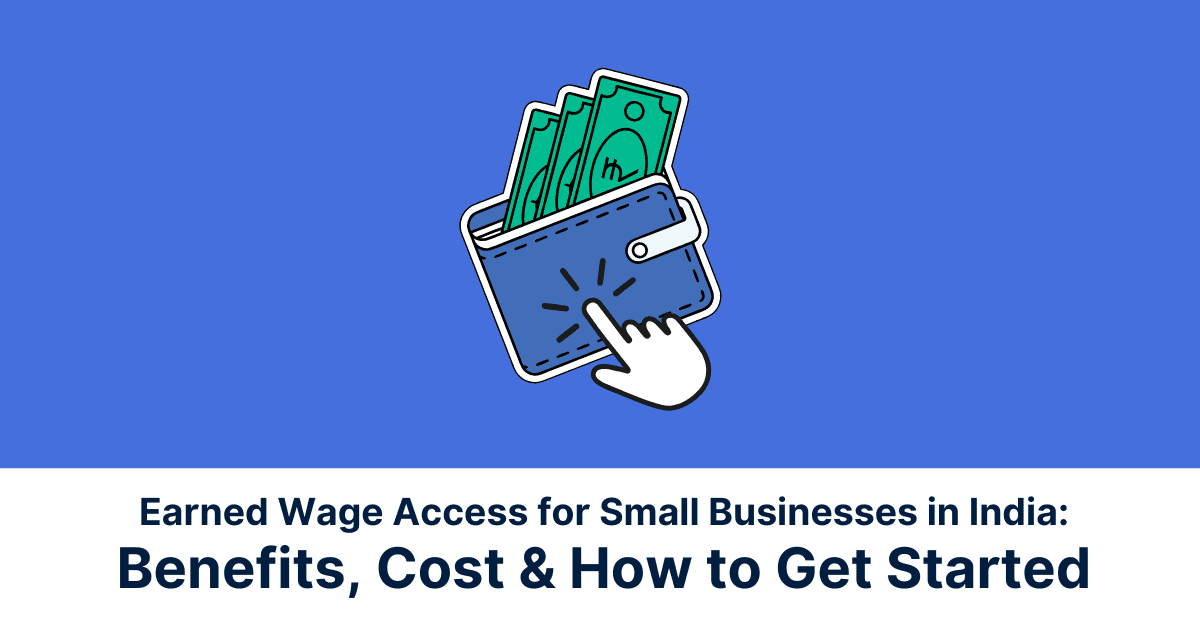
Earned wage access for small businesses is now one of the fastest-growing financial wellness benefits in India, and for good reason. Most SME employees in India live paycheck to paycheck, with no formal safety net for the gap between when money runs out and when payday arrives. Earned Wage Access (EWA) solves that problem by letting employees access the wages they have already earned, before payday, at zero cost to the employer.
For HR managers and SME owners juggling tight budgets and high attrition, EWA may be the single highest-ROI benefit available today. This guide covers what EWA is, the seven proven benefits for Indian small businesses, a clear cost breakdown, and a step-by-step setup guide, so you can make an informed decision for your team.
What Is Earned Wage Access (And Why Should Small Businesses Care)?
Earned wage access (EWA) is a financial benefit that allows employees to withdraw a portion of their already-earned salary before the official payday/salary credit day without any cost or liability for the employer.
EWA is not a loan. It is not a salary advance. There is no debt, no interest, and no repayment risk. See how Jify works for your team. The employee simply accesses money they have already earned through days worked, funds that would otherwise sit in the employer’s account until month-end. On the regular payday, the employer pays the full salary as usual, and the EWA provider (Jify) settles the difference in the background.
For small businesses in India, this distinction matters enormously. A traditional salary advance creates an informal IOU, administrative burden, and the risk of non-recovery. EWA creates none of those problems.
How Does EWA Work? (Step-by-Step for Employers)
Setting up EWA takes under 48 hours and requires no changes to your existing payroll cycle. Here is how it works:
- Step 1: Employee works their regular hours, wages accrue in real time in the Jify system.
- Step 2: Employee requests an advance via the Jify app, up to 40% of accrued wages per cycle.
- Step 3: Jify transfers the funds directly to the employee’s bank account within minutes.
- Step 4: On the regular payday, the employer pays the full salary as normal. Jify reconciles the advance in the background.
The employer’s payroll process is unchanged. HR spends zero additional time managing individual requests.
7 Proven Benefits of EWA for Small Businesses in India
EWA benefits Indian small businesses by reducing attrition, removing admin burden, and improving productivity, all without adding to payroll costs.
Each benefit below is grounded in India-specific context.
1. Dramatically Reduce Employee Attrition
Companies offering EWA report 20% to 35% lower attrition compared to those without the benefit. In Indian SMEs, replacing a single mid-level employee typically costs ₹50,000-₹1,50,000 when factoring recruitment fees, lost productivity, and onboarding time.
Across a team of 50 employees with a 30% annual attrition rate, that is ₹7.5–22.5 lakh per year in replacement costs alone. EWA addresses one of the top reasons employees leave- financial stress between paydays.
2. Zero-Cost Financial Wellness Benefit
EWA with Jify costs the employer nothing. Jify funds the advances and recovers a small per-transaction fee directly from the employee, typically ₹29 to ₹49 per withdrawal.
Compare that to health insurance (₹3,000 to ₹8,000 per employee per year), subsidised canteens, or transport allowances. EWA delivers meaningful financial relief to employees at a fraction of the cost of traditional welfare benefits, and in most cases, at zero employer cost at all.
3. Attract Better Talent in Competitive Markets
Manufacturing units in Pune, retail SMEs in Bengaluru, and IT services firms in Hyderabad all compete for the same talent pool as larger corporates. Large companies offer CTC packages, health cover, and stock options that most SMEs cannot match. EWA is one benefit that SMEs can offer immediately and that resonates directly with frontline and mid-level employees — people for whom a 10-day cash-flow gap before payday is a real, daily stressor.
4. Reduce Salary Advance Requests & Admin Burden
HR teams in Indian SMEs spend an average of 3 to 5 hours per month managing informal salary advance requests, reviewing, approving, tracking repayments, and chasing overdue amounts.
EWA eliminates this entirely. Employees self-serve through the Jify app. The process is automated. HR gets that time back, and the awkward manager-employee negotiation over advance amounts disappears.
5. Improve Productivity and Focus
According to PwC’s Employee Financial Wellness Survey, 56% of financially stressed employees spend 3 or more hours per week at work dealing with personal finances. In India, where salary to expense ratios are tight for many SME workers, financial stress between paydays is endemic.
EWA may reduce this distraction significantly, employees who know they can access earned wages in an emergency are less likely to be distracted by financial anxiety during working hours.
6. Build Employee Loyalty During Probation Periods
The first 90 days are when attrition risk is highest. New employees face bridging costs, security deposits, new commute expenses, work clothing and before their first paycheck arrives.
EWA gives new hires immediate access to accrued wages from day one, reducing early churn. Businesses using Jify report measurably higher 90-day retention rates among probationary staff, particularly in manufacturing, logistics, and retail.
7. Supports Compliance and Reduces Informal Borrowing
India’s Reserve Bank of India (RBI) has actively promoted formal credit access for underserved workers. Informal moneylenders charge annualised interest rates of 24–48%, sometimes higher. EWA provides a regulated, low-cost alternative that keeps employees in the formal financial system.
Jify operates in compliance with all applicable RBI guidelines and is not classified as a lending product, meaning there are no NBFC registration requirements for the employer. This also makes EWA a strong fit for IT companies and MSMEs in India looking for compliant financial wellness benefits.
Book a free demo with Jify, see how EWA works for your business in 20 minutes.
Is EWA Affordable for Small Businesses? (Real Cost Breakdown)
EWA with Jify costs the employer ₹0 to set up and ₹0 per month to run. The cost question for small businesses is not about EWA fees, it is about whether the cost of NOT offering EWA (attrition, lost productivity, admin hours) is higher than the cost of implementing it. It always is.
Here is how the numbers compare for a typical Indian SME with 50 employees:
| Cost Category | Without EWA | With Jify EWA |
| Employer setup fee | — | ₹0 |
| Employer monthly fee | — | ₹0 |
| Employee fee per withdrawal | ₹0 (but informal borrowing costs 24% to 48% p.a.) | ₹29 to ₹49 per transaction |
| Annual attrition cost (30% rate, 50 employees, ₹1L/hire) | ₹15,00,000 | ₹9,75,000 to ₹12,00,000 (20-35% reduction) |
| HR time on advance requests (3 hrs/month × ₹500/hr) | ₹18,000/year | ₹0 |
| Estimated annual saving per 50-employee business | — | ₹3,00,000 – ₹5,50,000 |
The ROI is clear: EWA pays for itself through attrition reduction alone. Every month of implementation delay has a measurable cost.
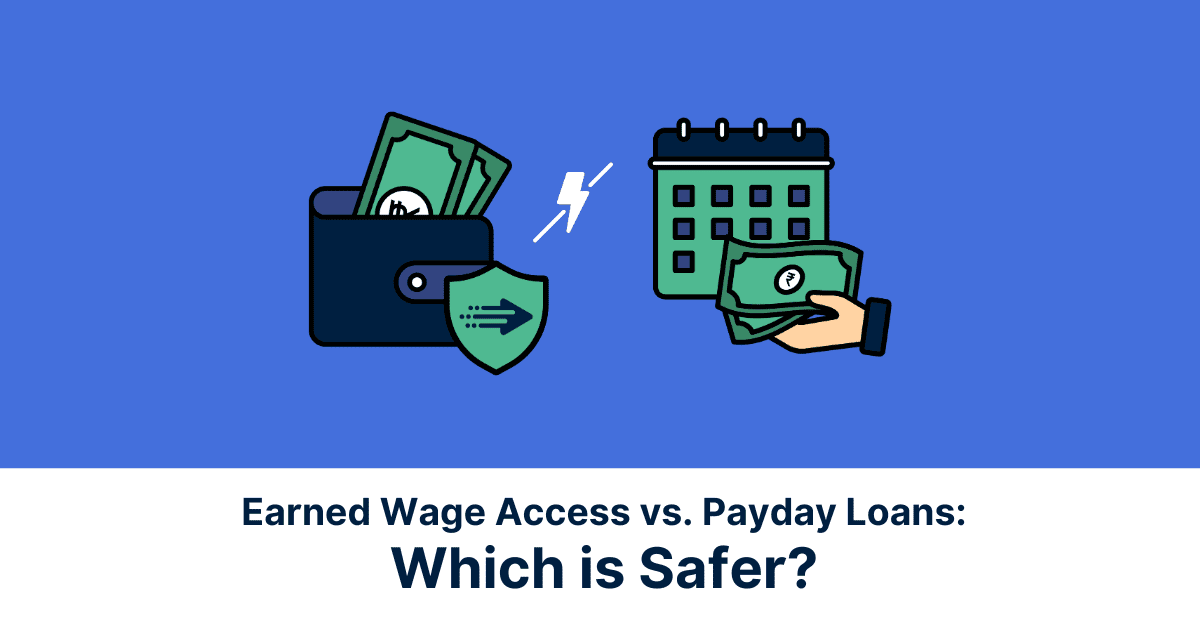
EWA vs.Traditional Salary Advances: What Is the Difference?
EWA and traditional salary advances both give employees early access to money, but they work completely differently, with very different risk profiles for the employer.
| Factor | Traditional Salary Advance | EWA (Jify) |
| Processing time | 1-3 days (manual approval) | Minutes (self-serve app) |
| Cost to employer | Hidden: HR time, bad debt risk | ₹0 |
| Employee repayment risk | Yes, partial or full default possible | None. Advance is from earned wages |
| Admin burden | High. Tracking, recovery, disputes | Zero, fully automated |
| Regulatory compliance | Informal, no audit trail | RBI-aligned, fully documented |
| Employee experience | Requires manager negotiation | Private, instant, dignified |
| Availability | Limited, manager discretion | 24/7, any day of the month |
The conclusion is straightforward. Salary advances create liability and admin overhead. EWA eliminates both. For any SME currently managing ad-hoc salary advance requests, switching to EWA reduces both employer risk and employee financial stress.
How to Set Up EWA for Your Business (Step-by-Step)
Setting up EWA for your business takes under 48 hours and requires no changes to your payroll cycle. Here is how to get started with Jify:
Step 1. Book a free Jify demo. A product specialist will walk you through the platform and answer questions specific to your business size and industry.
Step 2. Connect Jify to your HRMS, Jify integrates natively with Keka, Greytip, Darwinbox, ZingHR, and other leading Indian HRMS platforms. API-based integration takes under 2 hours.
Step 3. Configure your EWA policy, set the withdrawal limit (default: up to 50% of accrued wages per cycle) and any company-specific guardrails.
Step 4. Onboard your employees, Jify provides in-app onboarding and multilingual support (Hindi, Kannada, Tamil, Marathi, and others). Average employee activation time is under 10 minutes.
Step 5. Go live, employees can begin accessing earned wages immediately. Your payroll run on payday is unchanged.
Jify’s implementation team handles all technical setup. Most businesses are fully live within 48 hours of signing up.
Get Jify for your business, free setup. No employer cost. Live in 48 hours
Ready to Offer Financial Wellness to Your Team?
Earned Wage Access is quickly becoming one of the most valuable employee benefits available to small businesses in India. By giving employees access to wages they have already earned, EWA helps reduce financial stress, improve retention, and eliminate the administrative burden of managing salary advance requests.
Unlike traditional financial wellness programs, EWA requires no changes to payroll processes and can be implemented at little to no cost to the employer. For SMEs facing high attrition, talent shortages, and growing employee expectations, it offers a simple, scalable solution with measurable business impact.
As workforce wellbeing becomes a competitive differentiator, businesses that support employees’ financial needs are likely to see stronger engagement, loyalty, and productivity. If you’re looking for a practical way to improve employee experience without increasing payroll costs, EWA is a benefit worth considering.
Related Reading
- How Jify Works – product explainer and demo booking page
- EWA for IT Companies and MSMEs in India – Article 3
- Financial Wellness Benefits for Employees: A Complete Guide
Frequently Asked Questions
1. Does EWA cost anything for small business employers?
No. Jify’s EWA model is funded by a small per-transaction fee paid by the employee, typically ₹29 to ₹49 per withdrawal. Employers integrate the system at zero cost, with no monthly subscription or setup fee. The employer’s payroll process is unchanged.
2. What is the difference between EWA and a traditional salary advance?
A traditional salary advance creates debt: the employee owes the employer money, which must be tracked and recovered. EWA lets employees access wages they have already earned, there is no loan, no debt, and no repayment to manage. EWA also eliminates the admin burden of managing individual advance requests.
3. Can a company with fewer than 50 employees use EWA?
Yes. Jify works with businesses of all sizes, including SMEs with as few as 10 employees. There is no minimum headcount requirement. Small businesses in retail, manufacturing, logistics, and services are among Jify’s most active users.
4. Will employees overuse EWA?
Jify includes built-in guardrails to prevent overuse. Employees can access up to 50% of accrued wages per pay cycle, not more. The app also includes financial wellness nudges that encourage employees to save a portion of their wages rather than withdraw the maximum available each cycle.
5. Does Jify integrate with Indian HRMS platforms?
Yes. Jify integrates with Keka, Greytip, Darwinbox, ZingHR, and other leading Indian HRMS and payroll platforms. Integration is API-based and takes under 2 hours. Jify’s implementation team manages the technical setup at no cost.
6. Is earned wage access regulated in India?
EWA in India operates under existing RBI guidelines. Jify is compliant with all relevant payment and NBFC regulations. Critically, EWA is not classified as a lending product, so there are no additional regulatory obligations for employers offering it as a benefit.
*Disclaimer:
The information contained herein is not intended to be a source of advice concerning the material presented, and the information contained in this article does not constitute financial advice. The ideas presented in the article should not be used without first assessing your financial situation or without consulting a financial professional.