
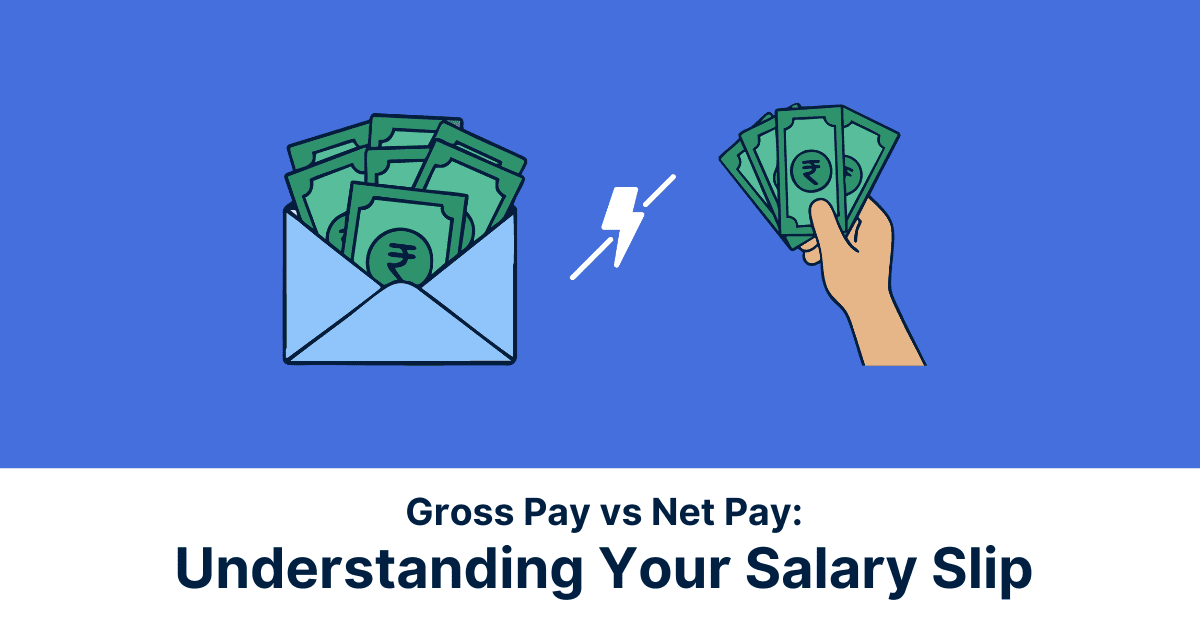
Confused when your salary slip shows one number but your bank account reflects another? You’re not alone. Many employees struggle to understand the difference between gross pay and net pay and this confusion can derail financial planning, budgeting, and salary negotiations. Knowing how your total compensation translates into actual take-home earnings is essential for making informed financial decisions.
Let’s break down these key components to help you understand your salary slip and take charge of your finances.
What Is Gross Salary?
Gross salary refers to the total earnings an employee receives from an employer before any deductions are applied. It encompasses all fixed and variable components associated with the compensation package. It typically includes basic pay, house rent allowance (HRA), dearness allowance (DA) where applicable, and special or supplementary allowances. Gross salary also generally accounts for bonuses, incentives, overtime pay, and employer-provided benefits that are taxable.
In many organisations, gross salary forms the basis for calculating statutory deductions, including provident fund contributions and professional tax. Understanding gross salary is essential for evaluating the full value of a compensation package, comparing job offers, and assessing how each component contributes to overall earnings. It represents the headline figure on a salary offer or appointment letter, distinct from the final take-home amount an employee receives.
Components of Gross Salary
Let’s take a look at some of the key components of gross salary:
Basic Pay: The fixed core component of earnings that forms the foundation for calculating other salary elements.
House Rent Allowance (HRA): A stipend provided to support housing expenses, often partially exempt from tax subject to income tax rules.
Dearness Allowance (DA): A cost-of-living adjustment typically offered in government and public-sector roles to offset inflation.
Travel Allowance: A benefit granted to cover commuting or official travel expenses within predefined limits.
Bonuses: Performance-based or statutory payments, such as annual bonuses or incentives, awarded in addition to fixed monthly income.
Why Gross Salary Appears Higher
Gross salary appears higher because it represents the total earnings before any deductions are applied. It includes all components such as basic pay, allowances, and bonuses, creating the impression of a larger income.
However, once statutory deductions like taxes, provident fund, and insurance are subtracted, the remaining amount net salary is what employees actually receive. This difference often leads to confusion when comparing offer letters with take-home pay.
What is Net Salary?
Net salary, commonly referred to as take-home pay, represents the actual amount an employee receives in their bank account after all mandatory and optional deductions are applied to the gross salary. These deductions typically include income tax, provident fund contributions, professional tax, and health insurance or other statutory withholdings as per organisational policy and legal requirements.
Additional deductions may arise from voluntary benefits such as meal plans or employee insurance schemes. Net salary therefore reflects the usable income available for personal expenses, savings, and investment planning. Understanding net salary is crucial for managing financial responsibilities effectively and evaluating job offers based on real purchasing power rather than headline compensation figures. Knowing this helps employees accurately assess their monthly budget and make informed decisions related to financial commitments.
Common Deductions from Gross Pay
Common deductions from gross pay fall into two categories:
(i) Statutory (ii) Voluntary
Statutory deductions include Provident Fund (PF) contributions, Professional Tax, and Tax Deducted at Source (TDS) on income, all mandated by law to support retirement savings and compliance with taxation regulations.
Voluntary deductions vary based on employer policies and employee choices, and may include health or life insurance premiums, cafeteria or meal plan deductions, and employee loan or salary advance repayments.
These deductions collectively reduce the gross salary to determine the final net salary, ensuring legal compliance and facilitating access to employee benefits.
How Net Salary Reflects True Earnings
Net salary represents an employee’s true in-hand salary because it reflects the actual amount available after taxes and statutory contributions have been accounted for. Unlike gross salary, which includes multiple components that do not convert into immediate spending power, net salary shows what can be used for daily expenses, savings, and financial commitments. This makes it the most accurate indicator for personal budgeting, lifestyle decisions, and long-term financial planning.
Gross Salary vs Net Salary: Key Differences
Gross salary and net salary represent two fundamental concepts in compensation structures, each serving a different purpose in salary evaluation and planning.
Gross salary refers to the total compensation an employer offers before any deductions. It includes fixed earnings such as basic pay and allowances, along with variable components like bonuses and performance incentives. This figure is typically used for CTC discussions, determining statutory contributions, and benchmarking pay scales across roles or industries.
Net salary, on the other hand, reflects the actual take-home amount an employee receives after taxes, provident fund contributions, professional tax, insurance deductions, and any voluntary payments are subtracted from the gross amount.
While gross salary communicates the value of the overall compensation package, net salary represents real earning potential and disposable income. For employees, understanding the difference helps in budgeting, investment planning, and evaluating job offers accurately. For employers, transparent communication about gross versus net salary helps manage expectations, improve trust, and strengthen retention by reducing payroll-related misunderstandings.
Definition and Formula
Gross salary is the total amount an employee earns before any deductions are made. It includes basic pay, allowances, and bonuses. The formula is simple:
Gross Salary = Total Earnings before Deductions
Net salary, on the other hand, is the actual take-home pay received after subtracting all statutory and voluntary deductions such as tax, provident fund, and insurance.
Net Salary = Gross Salary – Deductions
Comparison Table (Gross vs Net)
| Point of Difference | Gross Salary | Net Salary |
| Meaning | It is the total earnings before deductions | It is the take-home pay after deductions |
| Components | Comprises of basic pay, allowances, bonuses, incentives | Comprises of gross salary minus tax, PF, insurance, loans |
| Basis | Offered CTC or total package | Actual amount credited to bank account |
| Employee impact | Reflects total compensation value | Represents true disposable income |
Gross Salary vs Net Salary Example
Let’s consider the below example:
Arjun’s gross salary is ₹60,000 (which includes basic pay, allowances and bonuses)
His salary deductions include:
Provident Fund (PF)₹3,000
Tax Deducted at Source (TDS) ₹7,000
Health Insurance ₹2,000
Total deductions = ₹12,000
Calculation:
Net Salary = Gross Salary – Deductions
₹60,000 – ₹12,000 = ₹48,000
Arjun’s final monthly take home salary ie Net salary is ₹48,000.
How to Calculate Gross and Net Salary from Your Payslip
To calculate gross and net salary from a payslip, employees should begin by reviewing the earnings section. This section typically lists basic pay, allowances such as HRA and travel allowance, and any performance-linked incentives or bonuses. Adding all these components provides the gross salary value.
Next, employees must examine the deductions column, which includes statutory deductions such as provident fund, professional tax, and TDS, along with voluntary deductions like insurance premiums or loan repayments. Summing these items gives the total deduction amount. Once both figures are identified, the net salary can be verified using the formula:
Net Salary = Gross Salary – Total Deductions
HR portals usually display the same structure, making it easy to confirm monthly amounts. Regular review ensures accuracy, supports financial planning, and provides clarity on how employment benefits and statutory obligations affect take-home pay.
Locate Earnings Section
To identify the components that constitute gross salary, employees should begin by examining the “Earnings” or “Income” section of their payslip. This portion typically appears at the top or centre of the salary statement. It lists individual elements such as basic pay, house rent allowance, special allowance, conveyance allowance, and performance bonuses.
Each component is itemised with corresponding monthly amounts. By summing these figures, employees can calculate their gross salary. Access to HR or payroll portals offers a similar layout, allowing users to view detailed compensation breakdowns in the earnings category.
Check Deductions Section
To compute net salary, employees should carefully review the “Deductions” section of their payslip. This section typically lists statutory contributions such as Provident Fund (PF), Professional Tax, and Tax Deducted at Source (TDS).
It may also include insurance premiums for health or group life coverage, as well as any loan or salary advance recoveries. Summing these values provides the total deductions, which must then be subtracted from the gross salary to determine the actual take-home pay.
Why Understanding Gross and Net Pay Matters
Understanding the distinction between gross and net pay is essential for employees who wish to manage their finances responsibly and plan for long-term stability. Gross salary represents the full value of compensation, while net salary reflects the actual income available each month. Clear knowledge of both figures enables accurate budgeting, ensuring that major expenses, savings, and investment commitments align with real disposable income.
This clarity also strengthens negotiation capabilities when evaluating job offers or considering internal role changes, since employees can assess not only headline CTC figures but the true financial impact after statutory deductions. In addition, understanding payroll structures helps individuals anticipate taxation liabilities, optimise investments under tax-saving schemes, and set realistic savings goals. Employees who can interpret their payslips effectively gain better financial control, avoid unexpected shortfalls, and build a foundation for long-term wealth planning.
For Employees
Understanding the difference between gross and net salary helps employees plan their finances wisely. By knowing their exact take-home pay, they can create realistic monthly budgets, manage expenses, and plan for savings or investments effectively.
It also allows employees to explore tax-saving options under applicable laws and set accurate financial expectations when evaluating job offers or salary revisions. This clarity ensures better control over personal finances and long-term financial stability.
For Employers and HR Teams
For employers and HR teams, clear communication regarding gross vs net salary builds trust and reduces payroll-related misunderstandings. Transparent breakdowns of compensation structures demonstrate fairness and support regulatory compliance.
Accurate processing of payroll deductions ensures employees receive correct entitlements while safeguarding organisational credibility. This clarity enhances employee satisfaction, streamlines onboarding discussions, and contributes to a positive workplace environment grounded in confidence and transparency.
Conclusion:
Gross salary reflects the total compensation offered, while net salary represents the actual take-home earnings after deductions. Understanding this difference empowers employees to manage budgets,track tax liabilities, and evaluate compensation packages with accuracy.
Reviewing payslips monthly ensures transparency, confirms correct deductions, and helps identify any discrepancies early. Employees should also make use of HR portals or payroll software for real-time salary insights and detailed breakdowns. Consistent monitoring strengthens financial planning and promotes better awareness of personal earnings and statutory obligations.
Ready to take control of your finances? Take charge of your financial journey with Jify today. Access expert guidance that can help you optimise your financial strategy for both short-term stability and long-term growth
*Disclaimer:
The information contained herein is not intended to be a source of advice concerning the material presented, and the information contained in this article does not constitute financial advice.