
Can you really build an emergency fund on a low income? It can feel unrealistic when your salary barely covers rent, groceries, and basic bills. Many people assume emergency savings are only for those with high incomes, but that belief quietly keeps low-income earners stuck in cycles of debt. However, an emergency fund on low income is not about saving big amounts quickly. It is about creating a small financial buffer that protects you when life throws surprises in the form of medical expenses, sudden repairs, or a temporary loss of income.
Even saving a few hundred rupees a month can reduce stress and prevent reliance on credit cards or loans. This article breaks down a simple, practical emergency savings plan designed specifically for low-income earners. You will learn how to save small amounts consistently, make saving realistic on a low salary, and start building financial security without feeling deprived or overwhelmed.
What Is an Emergency Fund (And What It’s Not)?
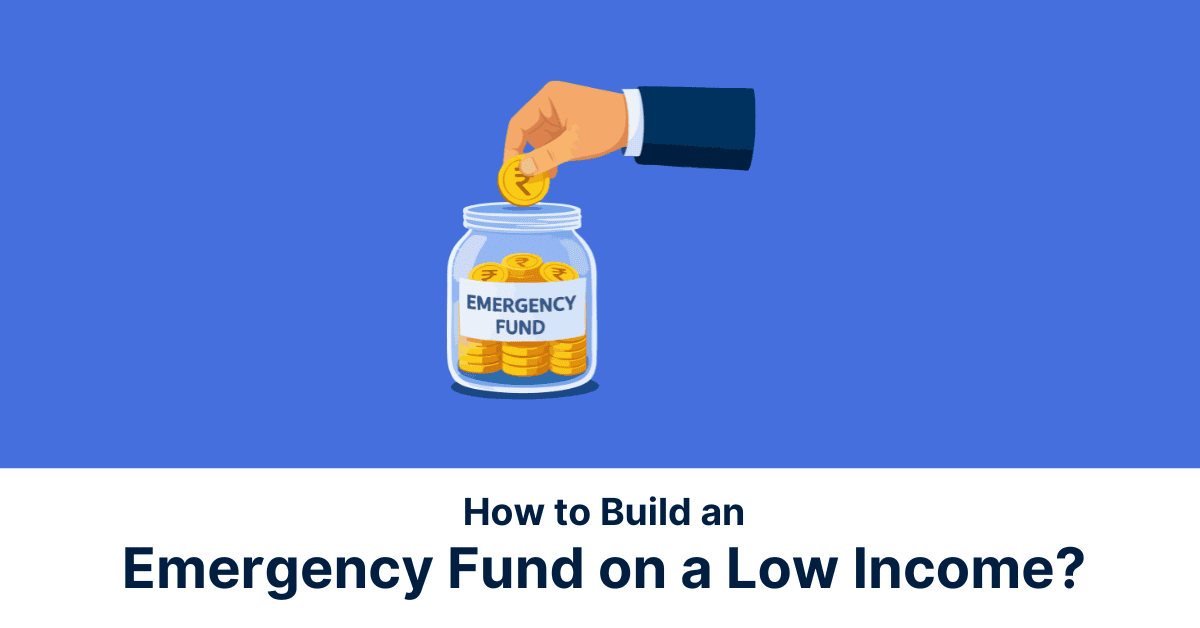
An emergency fund is money kept aside only for true, unexpected emergencies, not for routine expenses, lifestyle upgrades, or planned spending. It exists to protect you when life disrupts your income or creates sudden, unavoidable costs.
Real emergencies include sudden job loss, medical issues, urgent family emergencies, unplanned travel due to illness or loss, or critical home or vehicle repairs that cannot be delayed. These are situations where you have little choice and limited time to arrange funds.
An emergency fund is not meant for shopping, festivals, vacations, gadgets, or covering everyday shortfalls because the month ran tight. Those expenses may feel urgent, but they are usually predictable and should be planned separately.
This distinction matters even more for a low-income individual. A single emergency without savings can force reliance on high-interest loans, credit cards, or EMIs. That short-term fix often turns into a long-term debt cycle that becomes harder to escape over time.
How Much Emergency Fund Should You Aim For on a Low Income?
When you hear the advice to save 3-6 months of expenses, it can feel completely unrealistic on a low income. When every month already feels tight, that number sounds more like financial theory than real life. The key is to stop thinking in one big leap and start thinking in stages.
Stage 1 is your first safety net, ₹5,000-₹10,000. This small emergency fund for low income earners can cover basic medical needs, urgent travel, or a sudden repair without immediately reaching for a credit card.
Stage 2 is one month of essential expenses such as rent, food, utilities, EMIs, and basic transport. This gives you breathing room if income is delayed or interrupted.
Stage 3 is the long-term goal. Three months of essential expenses, offering real financial security.
To estimate essentials, keep it simple. Write down your monthly rent, utilities, groceries, minimum EMIs, and basic transport costs. Ignore lifestyle spending. This number becomes your emergency savings target, built slowly, one small step at a time.
How to build an emergency fund?
Step 1: Track where your salary actually goes
To build an emergency fund on a low income, the first step is understanding where your salary actually goes. Most people don’t overspend dramatically; money usually slips away through small, repeated habits. Until you see those leaks clearly, saving can feel impossible.
Try a simple 30-day tracking method. For one month, note down every expense cash, UPI, cards, everything. You can use a basic notes app, spreadsheet, or any simple expense-tracking app. The tool doesn’t matter; consistency does.
As you track, watch for silent leaks. These often include frequent food ordering, choosing cabs instead of public transport, unused app subscriptions, or impulse online purchases that seem small in isolation but add up fast.
Next, divide your expenses into three buckets: essentials like rent, groceries, utilities, and EMIs; important but flexible expenses such as eating out or entertainment; and non-essential spending you could reduce or pause.
This isn’t about cutting all joy. The goal is to identify just two or three areas where you can save a little regularly and without pain.
Step 2: Decide on a Tiny, Non-Negotiable Monthly Saving Amount
Think of this as a bill you pay to yourself, just like rent, electricity, or your phone plan. It gets paid first, not with whatever money is left at the end of the month.
When income is low, starting small is not a weakness; it’s smart. Even ₹200–₹500 a month is enough to begin building an emergency fund on low income. At this stage, the habit matters far more than the amount. A small, consistent saving done every month is more powerful than big intentions that never stick.
To choose your number, look back at your expense tracking. Identify an amount that feels slightly uncomfortable but still realistic. It should require a small adjustment, maybe fewer food orders or one less cab, but not leave you stressed or deprived. If the number feels too easy, it won’t build discipline. If it feels too painful, you won’t sustain it.
Lock this amount in mentally. Treat it as non-negotiable, even in tight months. This is how emergency savings quietly begin to grow.
Step 3: Automate Your Savings So You Don’t Rely on Willpower
Manual saving fails for a simple reason: by the time you remember to save, the money is already gone. Daily expenses, small treats, and unexpected costs quietly eat into your balance. Relying on willpower at month-end almost always means saving gets skipped.
That’s why automation matters, especially when you’re building an emergency fund on low income. The easiest method is setting a standing instruction from your salary account to a separate savings account immediately after payday. The money moves before you have a chance to spend it. What you don’t see, you don’t miss.
If your situation allows, you can also use a SIP-like approach as a very low-risk, high-liquidity option. Keep this simple and accessible; emergency savings should be easy to withdraw, not locked away.
Timing is critical. Always move money right after salary credit, never at the end of the month. This creates a ‘pay yourself first’ habit.
Salary-linked tools, reminders, and automated features like those used in platforms such as Jify, can support this behaviour by removing friction and making saving feel automatic rather than effortful.
Step 4: Choose the Right Place to Keep Your Emergency Fund
Two rules matter more than everything else: safety and liquidity. Safety means the money should not be exposed to market ups and downs. Liquidity means you should be able to access it immediately when an emergency hits without penalties, paperwork, or waiting periods.
For most people in India, the simplest option is a separate savings account used only for emergency savings. Keeping it separate reduces the temptation to spend and ensures the money is always available when needed. Some banks also allow you to link a short-term fixed deposit (FD) to this account. This can be optional and useful if you want slightly better returns while still being able to break the FD quickly in emergencies.
What you should avoid is just as important. Do not park emergency money in high-risk investments like stocks or crypto. Avoid locked-in products or instruments that take days to withdraw. Anything that can suddenly lose value or delay access defeats the purpose of an emergency fund. When stress is high, certainty and speed matter more than returns.
Step 5: Grow Your Fund with Small Wins, Not Just Monthly Savings
Monthly savings create the foundation, but small wins are what help your emergency fund grow faster, especially on a low income. These wins come from money you weren’t counting on, which makes them easier to save without affecting daily life.
Any bonus, incentive, or overtime pay is a great place to start. Since this money isn’t part of your regular salary, redirecting a portion of it to your emergency fund won’t feel like a sacrifice. The same applies to refunds, cashbacks, or one-off side income. These amounts often disappear quickly if left in your main account.
You can also create small cash infusions by selling unused items, old gadgets, clothes in good condition, or furniture you no longer need. Turning clutter into emergency savings is surprisingly effective.
A simple rule helps remove decision fatigue: whenever extra money shows up, send 30-50% of it straight to your emergency fund. You don’t need to save all of it. Keeping some for yourself maintains balance, while the rest strengthens your financial safety net. Over time, these small, irregular boosts can make a big difference.
How to Handle Emergencies Without Breaking Your Fund Completely
Emergencies will happen. That’s not a sign of failure, it’s the entire reason an emergency fund exists. Using your fund doesn’t mean you were bad with money; it means you planned for reality instead of pretending life is predictable.
Before dipping into the fund, pause for a simple decision check. Ask yourself: Is this truly urgent and necessary? Will not paying seriously affect my health, my job, or my ability to meet basic living needs? If the answer is yes, this is exactly what the fund is for.
When it’s a real emergency, use your emergency savings first instead of high-interest credit cards or instant loans. Those options often solve today’s problem by creating a much bigger one tomorrow, trapping you in EMIs and interest for months or years.
After the emergency passes, rebuilding matters. Restart your small monthly contributions as soon as possible, even if the amount feels tiny. If you can, increase it temporarily until the fund recovers. Emergency funds aren’t meant to stay untouched forever. They’re meant to be used and rebuilt, again and again.
Conclusion: Start Tiny, But Start Today
Building an emergency fund on a low income doesn’t start with a big salary or perfect budgeting. It starts with a small decision made consistently. Even a few hundred rupees set aside each month creates distance between you and panic borrowing. Over time, that distance becomes security.
The most important step isn’t saving more, it’s starting now. Tiny amounts build habits, habits build buffers, and buffers protect you when life inevitably throws something unexpected your way. Waiting for the “right time” usually means staying exposed for longer.
You don’t have to do this alone. Tools that give clarity on spending, salary-linked support, and smart financial guidance can make the process easier and more sustainable. Explore more Jify articles to deepen your understanding of everyday money habits, or use Jify’s tools to support your emergency savings plan while staying out of the debt cycle.
Financial stability is built quietly. Start small. Start today.
*Disclaimer:
The information contained herein is not intended to be a source of advice concerning the material presented, and the information contained in this article does not constitute financial advice. The ideas presented in the article should not be used without first assessing your financial situation or without consulting a financial professional.