
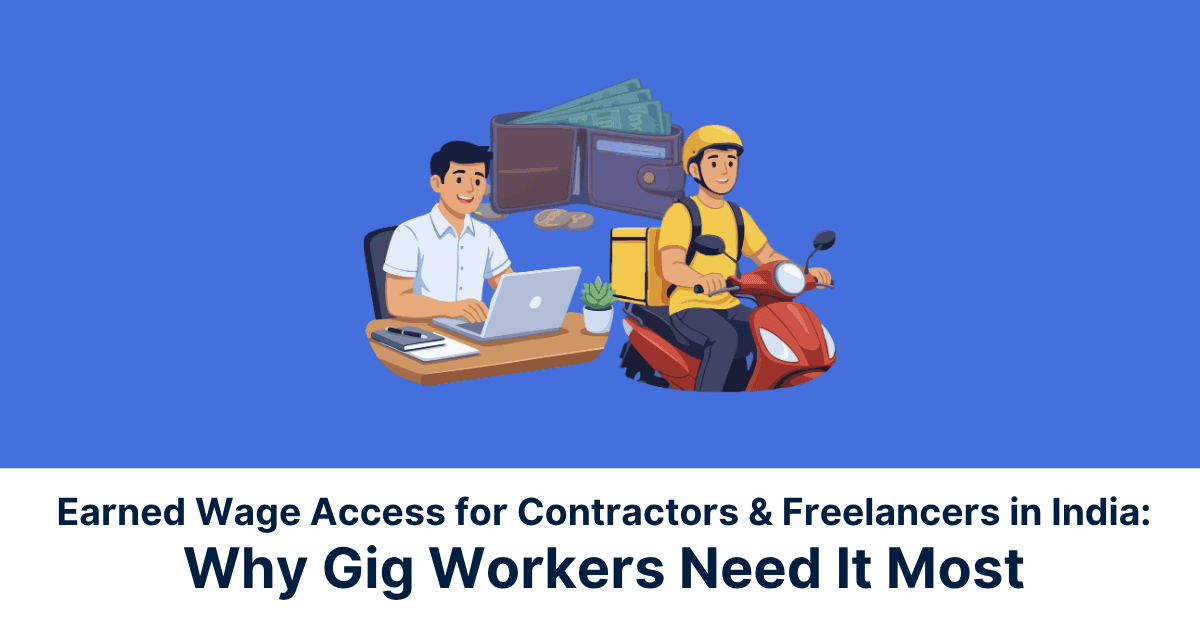
India has over 80 million gig workers and most of them have a cash flow problem that is not caused by low earnings. Earned wage access for freelancers in India solves a specific problem, you have done the work, the money is owed, but you cannot access it until the client pays. Sometimes 30 to 60 days later.
According to NITI Aayog’s 2022 report, India’s gig workforce is projected to reach 23.5 million by 2030, with millions more in informal platform-based roles. EWA gives these workers on-demand access to the wages they have already earned, without waiting for the payout cycle.
Why Contractors and Freelancers Face Unique Financial Challenges
Freelancers and contractors face financial pressures that salaried employees simply do not encounter. Irregular income, long payment cycles, and the near-total exclusion from traditional credit products, leads to a cycle of financial stress.
According to a 2023 survey by Payoneer, 74% of freelancers globally cited late payments as their biggest professional challenge and in India, where 30 to 60 day invoice terms are standard, this problem is especially acute.
Banks and NBFCs require payslips to offer personal loans or credit cards. Most gig workers have neither. That leaves high-interest informal lending often at 24% to 48% per annum as the only fallback when a client is late or a project gap opens up.
EWA offers a structured alternative: access to wages you have already earned, with no interest and no credit check.
The 3 Biggest Financial Pain Points for Indian Freelancers in 2026
- Late client payments: Having invoices on 30 to 60 day terms creates unpredictable income gaps, even when work is consistent. This makes it difficult to plan monthly expenses, manage EMIs, or maintain steady cash flow without dipping into savings.
- Bridging gaps between projects: Bridging gaps between projects: even a short gap of one or two weeks between contracts can disrupt financial stability. Freelancers often have to cover fixed expenses during this time, which adds pressure despite earning well overall.
- Qualifying for personal finance products: Qualifying for personal finance products: no payslip, no Form 16, and irregular income make most traditional credit products inaccessible. This limits access to loans, credit cards, and even rental approvals, creating additional friction in both personal and professional life.
What Is Earned Wage Access for Contractors?
Earned wage access (EWA) for contractors is on-demand access to their wages that have already been accrued through work, before the official payout date. For salaried employees, EWA is straightforward: the employer tracks hours and salary accrual in real time. For gig workers and contractors, the calculation is adapted to fit non-traditional employment structures.
On Jify’s platform, earned amounts are calculated based on one of three inputs, depending on how a worker’s engagement is structured:
- Hours tracked: for time-based contractors billing hourly or daily rates.
- Milestones completed: for project-based freelancers where each deliverable has an agreed value.
- Shifts confirmed: for platform gig workers (delivery, home services) where shift completion is logged digitally.
The distinction from salaried EWA is that the accrual data comes from the platform or employer integration, not from a payroll system. As long as the work is verified and the payment obligation is confirmed, the earned amount becomes accessible, up to the platform-set withdrawal limit.
This is not a loan. There is no interest, no repayment schedule, and no credit bureau involvement. When the client or platform pays out, the EWA advance is simply reconciled from those earnings.
6 Key Benefits of EWA for Freelancers and Contractors in India
1. Access Cash Between Project Milestones Without Taking Loans
EWA removes the need for personal loans to cover gaps between project milestones. Consider a software developer on a ₹3 lakh contract, payable 45 days after delivery. With EWA, they can access a portion of that confirmed earning immediately after the milestone is logged, without approaching a lender at 18%-36% p.a. The money was already earned; EWA simply moves the access date forward.
2. Smooth Income Volatility and Manage Monthly Expenses
Rent, EMIs, and school fees fall due every month, freelancer income does not. A content writer who earns ₹80,000 in one month and ₹20,000 the next faces the same fixed obligations both months. EWA allows workers to draw down earnings as they accrue, converting an uneven income stream into a more predictable cash flow. According to a Financial Health Network study, workers use EWA primarily for essential expenses and to bridge timing gaps between paychecks, improving liquidity at the moment bills are due
3. Build a Better Financial Profile Without Traditional Credit
EWA use may help freelancers build a verifiable financial history on Jify’s platform. While EWA itself does not affect a credit score, the record of consistent earnings and responsible advance usage can inform future credit assessments, particularly as India’s Account Aggregator framework matures and alternative data gains usage with lenders.
4. Avoid Predatory Short-Term Lending and App-Based BNPL Traps
EWA is not BNPL and not a personal loan. Buy Now Pay Later products carry deferred interest and fees; personal loans require credit checks and generate repayment obligations.
EWA is transparent, you access money you have already earned, the fee (if any) is fixed and disclosed upfront, and repayment happens automatically from the same earnings cycle. There is no debt created.
5. Negotiate Better With Clients — Without Financial Desperation
Financial security from EWA can improve a freelancer’s negotiating position. When a contractor is running low on cash, they may accept lower project rates or unreasonable deadlines just to close the deal quickly.
EWA removes that desperation. A freelancer who can cover next month’s rent from accrued earnings is in a fundamentally different negotiating position, and can hold out for the right rate.
6. Platforms and Staffing Firms Can Offer EWA to Attract Top Contractors
For businesses and platforms that engage contractors, offering EWA may deliver a measurable retention advantage. Staffing agencies that provide EWA access to their contractor pool report 25%–40% higher contractor retention, according to EWA platform data.
In a talent market where skilled gig workers can switch between platforms easily, financial wellness benefits, including EWA, have become a differentiator for both recruitment and retention.
Ready to offer EWA to your contractor team? → Book a free Jify demo | https://www.jify.co/contact-us/
How Jify’s EWA Works for Non-Salaried Workers
Jify calculates a contractor’s accessible earnings in real time based on verified work data. The platform integrates with the employer or gig platform via API, pulling hours logged, milestones marked complete, or shifts confirmed. Once the work is verified, the earned amount is reflected in the worker’s Jify dashboard within minutes.
The question most contractors ask first is- how is my earned amount calculated?
The answer depends on the integration type:
- Hours-based: Jify multiplies confirmed hours by the agreed rate to calculate accrued earnings.
- Milestone-based: Each completed milestone is assigned its agreed value; the total accrued is the sum of all completed milestones in the cycle.
- Shift-based: Confirmed shifts are converted to earnings using the platform’s per-shift rate.
Workers can withdraw up to 40% of their verified accrued earnings per cycle, subject to limits set by the employer or platform in the Jify dashboard. The withdrawal is transferred to the worker’s linked bank account, typically within minutes. When the platform or client pays out at the end of the cycle, the advance is automatically reconciled, no manual repayment required.
Setup for employers and platforms takes less than a day. Jify provides API documentation, onboarding support, and a self-serve dashboard for monitoring usage, limits, and reconciliation.
Who Can Use Jify EWA as a Contractor or Freelancer?
Jify EWA is available to contractors and freelancers whose employer or platform is integrated with Jify. Eligibility is based on verified work, not employment status or credit history. Workers across a wide range of industries may be eligible:
- Platform-based gig workers (example: workforce at Swiggy, Urban Company, Porter)
- IT project contractors and software developers on milestone-based contracts.
- Marketing, design, and content freelancers working with businesses on Jify’s platform.
- Construction and site contractors with verified shift or day-rate records.
- Healthcare and staffing agency workers engaged on short-term or rolling contracts.
Eligibility checklist for contractors:
- Your employer, staffing agency, or platform is integrated with Jify.
- Your work is verifiable- via hours tracked, milestones logged, or shifts confirmed.
- You have a valid Indian bank account for disbursement.
- You are 18 years of age or older.
Individual freelancers whose clients are not yet on Jify can request an invitation via jify.co, Jify’s onboarding team can approach the employer or platform directly.
EWA vs Other Financial Options for Indian Freelancers (Comparison)
For a freelancer facing a short-term cash gap, there are several options, but they are not equal. The table below compares EWA against the most common alternatives on the factors that matter most.
| Option | Cost | Processing Time | Requires Employment Proof | Impacts Credit Score |
|---|---|---|---|---|
| EWA (Jify) | Minimal/nil fee no interest | Minutes | No | No |
| Personal Loan (bank/NBFC) | 18%–36% p.a. | 2-7 days | Yes, payslip/ITR required | Yes, credit check + record |
| BNPL App | Deferred interest + fees | Same day | Soft check only | Partial, missed payments affect score |
| Invoice Factoring | 2%-5% of invoice value | 1-3 days | No, invoice-based | No |
| Credit Card | 36%-42% p.a. if revolving | Instant (if active) | Yes, for new applications | Yes, utilisation affects score |
EWA stands apart because it is not a credit product. No debt is created, no credit bureau is involved, and repayment is automatic from the worker’s own earnings.
For freelancers who are already earning, but simply waiting to be paid; EWA is the most cost-effective and structurally sound option.
India’s Gig Economy in 2026: Why EWA Is Becoming Essential
India’s gig economy is formalising, and EWA is emerging as part of that infrastructure. NITI Aayog projects India’s gig workforce will reach 23.5 million by 2030, with platform-based work accounting for a growing share of urban employment.
The proposed Gig Workers (Welfare and Social Security) Bill 2024 is designed to mandate platforms to contribute to a social security fund for gig workers, a clear signal that India’s policy direction is toward greater formalisation of the gig economy. EWA fits naturally into the picture, it gives gig workers access to financial stability that does not require them to have a formal employment contract.
Gig platforms in India are also under increasing pressure from workers demanding faster and more flexible pay. EWA is not a future-facing benefit. It is a practical response to conditions that millions of Indian gig workers are navigating right now, irregular pay cycles, no access to credit, and monthly financial obligations that do not pause between projects.
Conclusion: Financial Flexibility Is the New Employment Benefit
India’s 80+ million gig workers have built their livelihoods around flexibility, still their access to income hasn’t kept up. Waiting 30+ days to receive money already earned isn’t a necessity; it’s a legacy payment habit. Earned Wage Access (EWA) closes that gap by aligning income with when it’s actually needed.
For freelancers and contractors, this shift is practical. It means steadier cash flow to meet fixed monthly commitments, less dependence on high-cost credit, and the ability to make decisions from a place of stability rather than urgency.
For businesses and platforms, EWA is a simple but meaningful lever. It strengthens contractor experience and retention while fitting seamlessly into existing payout structures, no maintenance required, just a smarter way to deliver earnings.
Explore how Earned Wage Access can support your team -> https://jify.co/
Frequently Asked Questions About EWA for Freelancers
1. Can a freelancer with no fixed employer use EWA?
Yes, if they work with a company or platform integrated with Jify. The EWA amount is based on verified work completed, hours, milestones, or shifts, not on employment status. A freelancer whose regular client is on Jify can access EWA even without a traditional employment contract.
2. Is EWA different from a personal loan for freelancers?
Yes. EWA is not a loan, it gives you early access to money you have already earned. There is no interest, no credit check, and no repayment schedule. A personal loan creates new debt; EWA simply moves the timing of your existing earnings forward. When your client pays out, the advance is automatically reconciled.
3. Can gig workers on platforms like Zomato or Urban Company use Jify EWA?
Platform-based gig workers can use EWA if their platform is integrated with Jify. Integration enables real-time shift and earnings verification. Contact Jify at jify.co to check current platform availability, Jify’s team can also approach your platform directly to explore integration.
4. How is the earned amount calculated for freelancers?
Jify uses one of three methods depending on how your engagement is structured: hours tracked multiplied by your agreed rate, milestones completed at their agreed values, or shifts confirmed at the per-shift platform rate. The calculation method is set when your employer or platform onboards with Jify. Workers can view their accrued amount in real time on the Jify dashboard.
5. What is the maximum amount a freelancer can withdraw via EWA?
Typically up to 40% of verified accrued earnings per cycle, subject to the limits set by the employer or platform in the Jify dashboard. This cap is designed to ensure workers retain sufficient earnings in each cycle for reconciliation, and can be adjusted by the platform administrator.
6. Does using EWA affect my credit score?
No. EWA is not a credit product and does not involve a credit check or create a credit record with any bureau. Using EWA, regardless of how frequently, has no impact on your CIBIL or Experian score. This makes it fundamentally different from personal loans, credit cards, or BNPL products.
7. How quickly is the EWA transfer credited to my bank account?
Once a withdrawal request is approved in the Jify dashboard, funds are typically credited to the worker’s linked bank account within minutes via IMPS. Transfer times may vary slightly depending on the receiving bank, but same-day credit is standard in most cases.
Related reading:
- EWA for small businesses
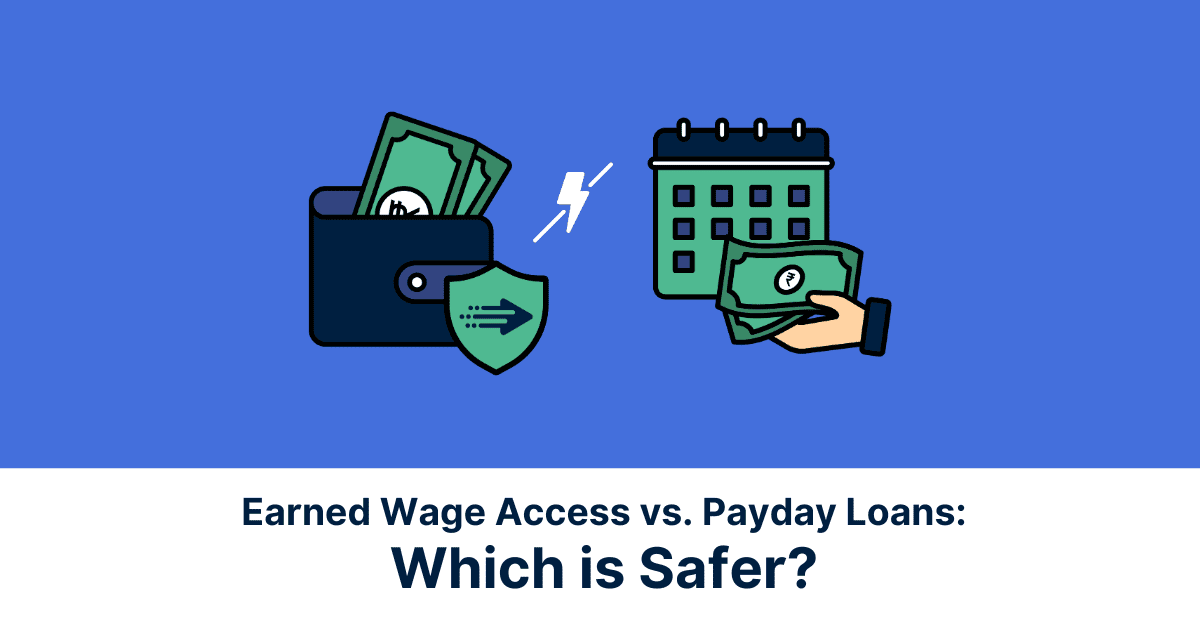
- EWA or Payday loans: Which is safer
- What is earned wage access in India? Jify homepage guide
*Disclaimer:
The information contained herein is not intended to be a source of advice concerning the material presented, and the information contained in this article does not constitute investment advice. The ideas presented in the article should not be used without first assessing your financial situation or without consulting a financial professional.